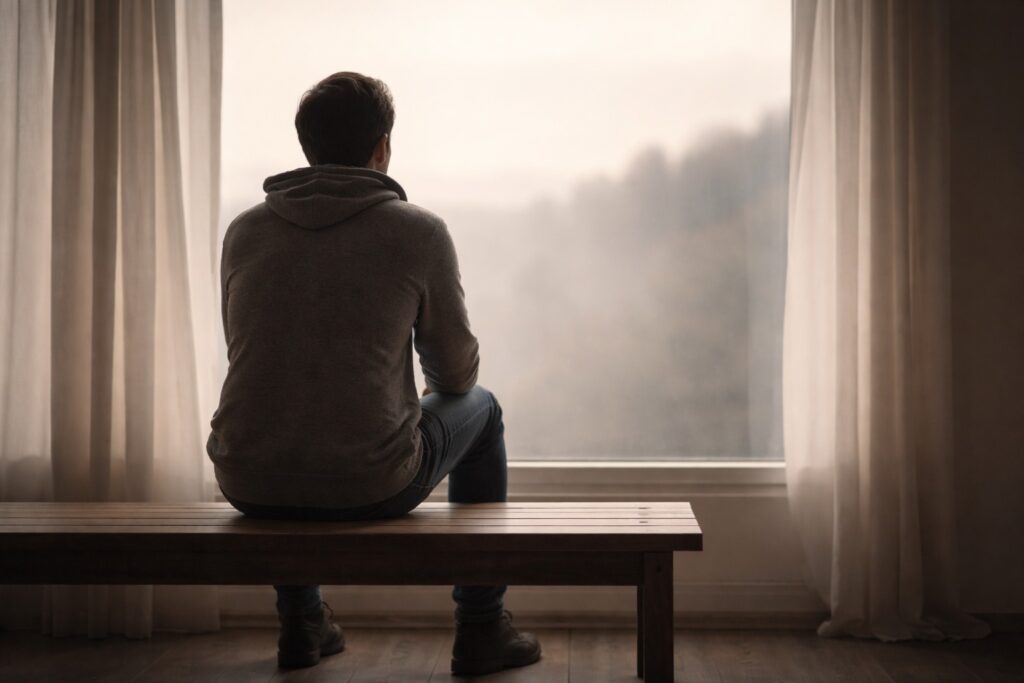
There are waits that seem small, and others that leave us completely undone. You wait for an answer, for something to change, for God to do what you believe He should have done already. And in the meantime, impatience starts to speak.
We have all lived this—not just in big decisions, but daily: processes that take longer than expected, doors that don’t open, prayers that seem to stay in silence. We live in a culture that trained us to have everything "now," and when time stretches out, we feel like something isn't working… or that God arrived late.
But the Bible insists on something uncomfortable: waiting is not a punishment; it is a place of formation..
That is why, when we speak of patience as a Fruit of the Spirit, we aren’t talking about resignation or grit. We are talking about learning to remain, to trust, and to obey—even when the outlook is unclear.
Patience isn’t born overnight
Patience doesn't appear by magic, nor does it arrive just because we ask for it.
Often we pray, "Lord, give me patience,"but we forget that this prayer usually opens the door to situations where patience will be tested..
That is exactly what happened in the story of King Saul in 1 Samuel 13.. he people were under threat, the Philistines were advancing, fear was growing, and time was running out. Saul had a clear instruction: wait.Seven days. Nothing more.
But waiting, when everything seems to be falling apart, is harder than it sounds. Amidst the pressure, the people began to scatter. Some hid; others trembled with fear. And Saul… decided to act on his own.
Here is an uncomfortable truth: impatience almost always disguises itself as "good intentions."Saul didn't say, "I’m going to disobey." What he did was justify his decision. The problem wasn't just what he did, but when he did it and why. he did it
When we stop waiting on God, we start building solutions with our own hands. Patience is deeply connected to faith, especially when we must trust God without seeing immediate results.
Pressure pushes us toward poor decisions
Pressure has a curious way of distorting our perception; it makes us believe that if we don’t act now, everything will be lost.
Saul watched the time pass, saw the people leaving, and thought he couldn't afford to wait any longer. He offered the sacrifice that was not his to give. He crossed a line he shouldn't have crossed, and there, a question arises that confronts us all: How many times have we made hurried decisions simply because we didn't know how to wait?
Waiting for a difficult conversation, the right timing, or simply for God to confirm a situation. Personally, I’ve learned that many of my wrong decisions weren't born from malice, but from haste. From not wanting to feel the discomfort of the wait. From wanting to close the process prematurely.
Patience, instead, forces us to stay where we are… and that hurts.
The wait reveals who we trust
When Samuel confronts Saul, he doesn't do it just because of a poorly performed ritual. He confronts him because his decision revealed something deeper: he had stopped fully trusting God..
Impatience doesn’t just break processes; it breaks trust. The consequence was harsh: Saul's kingdom would not endure. Years of promise were lost for hours of impatience.
This part of the story always confronts us because it reminds us that not everything is lost immediately, but much is weakened when we act outside of God's timing.
Waiting doesn't mean staying passive; it means staying obedient. Patience doesn't immobilize us it aligns us. Learning to wait also requires self-control,especially when anxiety pushes us to decide ahead of time.
A "good wait" is not wasted time
There is a phrase that echoes loudly in this process:
"The only thing harder than waiting on God is wishing you had waited."
How many times have we thought: "If only I had waited a little longer…" or "If only I hadn't rushed ahead…"?
Patience teaches us that the process is also part of the promise.God is not only interested in the final result, but in what is formed within us while we walk toward it
Waiting teaches us to depend, to listen, and to obey even when we don't understand. That, though it may not be seen immediately, produces character..
A practical call for this week
I want to propose something very simple but profound. During this week, identify one concrete situation that normally steals your patience. Not something abstract. Something real: a person, a process, a specific wait.
Then, ask yourself honestly:
- Why is it so hard for me to wait here?
- What do I usually do when impatience appears?
- What is God trying to teach me in this process?
Take that situation and hand it over to God—not so He will take it away, but so He will form you in the midst of it. Patience isn't developed by fleeing the wait, but by remaining in it with God..